At City Theatre, Before Malcolm Little Was Malcolm X and Before John Sanford Was Redd Fox
Review on playwright Jonathan Norton’s new play, Malcolm X and Redd Foxx Washing Dishes at Jimmy’s Chicken Shack
Mingsi Ma
2/2/20264 min read

Playwright Jonathan Norton’s new play Malcolm X and Redd Foxx Washing Dishes at Jimmy’s Chicken Shack in Harlem (Malcolm X and Redd Foxx hereafter) had its co-world premiere at City Theatre after its run at TheatreSquared in Fayetteville, AR, last November. I chuckled when I first saw the actors being interviewed on TV: the name of the play, wow, it’s really long! Kudos to them for making it through the whole title without taking a breath. Still, this title captures the show in a literal way. Before Malcolm Little was Malcolm X, and before John Sanford was Redd Foxx, they were 18 and 20, washing dishes in the back of Jimmy’s Chicken Shack. (Fun fact: before Charlie Parker became the famous jazz saxophonist we all know, he also washed dishes there.) Norton takes a unique vantage point, looking at these two famous people at a rather humbling point in their lives, and amplifies this unexpected friendship.
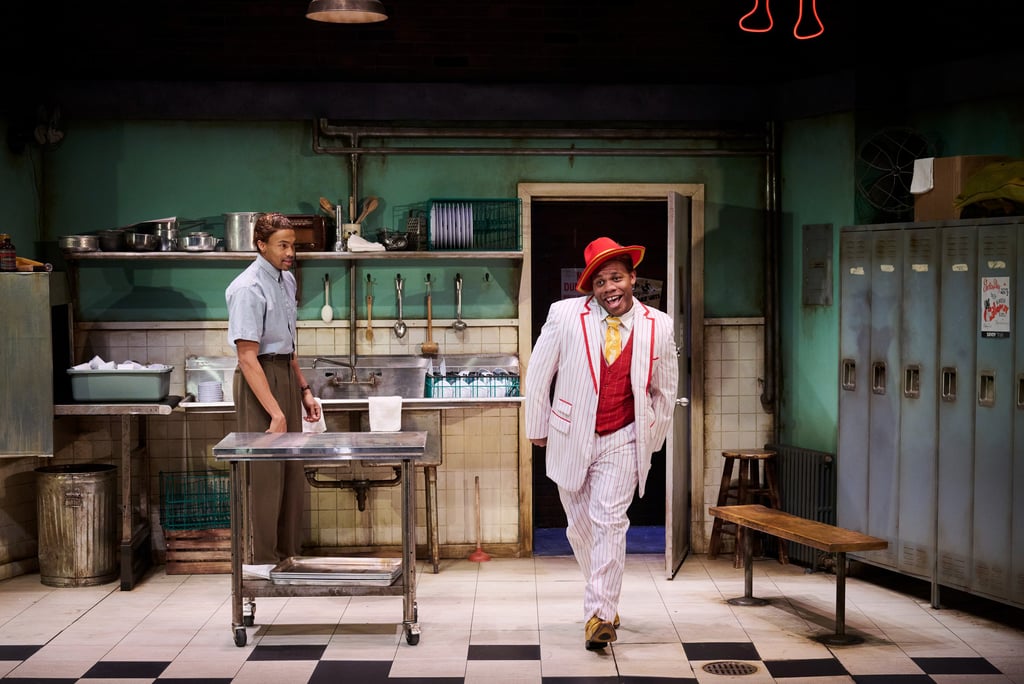
The stage is set in Harlem in 1943. Scenic Designer Kimberly V. Powers and Properties Designer Brodie Jasch do an exceptional job at creating a dirty, rusty kitchen that makes you doubt if the staff ever cleans their place. The rust on the sink and the locker, the stubborn stain on the wall, and the dirt that stuck in the tile grout. It’s a kitchen that feels like it would be selected for those Gordon Ramsey restaurant rescue shows that you probably don’t want to watch while eating. And at multiple scenes, the black water oozing out from the onstage sewage was… I admired it. Disgustingly brilliant!
You can tell the heart that the designer and the production team have put into it. During the transition between acts, the simple act of removing and returning the dishes through the side opening creates movement, which I found effective in supporting the actors to momentarily step aside from the stage for change.


Photo by Kristi Jan Hoover
Edwin Green plays Little (Malcolm X), and Trey Smith-Mills plays Foxy (Red Foxx). The two are the soul of the night’s performance and the only people on stage. In one interview, Director Dexter J. Singleton mentions that both Green and Smith-Mills have been part of the show’s development process as well as the entire journey: “They’ve been along with us for each draft, and to be able to implement new dialogue into the script and then have actors who you can just bounce it off of immediately and see how it works and how it lands, and then be able to go back and do revisions.”
Green and Smith-Mills’ deep involvement in this play is evident in their performance on stage. This magnetic duo moves with a tightly synced rhythm. Their dynamic banter is fueled by seamless collaboration and a genuine sense of rapport. The two do a good job capturing the energy of late adolescence. They appear to be goofy, with a streak of boyish impulsiveness and buoyancy, navigating chaos in their early adult lives. In the first act, as Little dances to music leaking from the lobby while washing dishes and Foxy throws random punches into the air, they move with loose, free-flowing torsos. Their restless and animated physicality stands in contrast to the composed stillness performers often use to signal maturity in adult roles.
What I love most is how Malcolm X and Redd Foxx delicately paces the friendship that develops between the two characters amid the humor. Starting from the moment Little and Foxy first introduce themselves, when Foxy jokes, “respect your elder,” playwright Norton and director Singleton treat each shared moment as a step toward growing trust. That trust deepens as Little encourages Foxy to go after his dream, Foxy cuts his hair to help Little cope with his hair insecurity, and Little later advocates for Foxy to get a higher-paid front-of-house position at the restaurant. Underneath bantering and teasing, Little and Foxy share their insecurity, anxiety, procrastination, and other struggles with each other – You know they’re close and care about each other, without the scripts saying so.
Little and Foxy’s friendship also stands against a particular historical backdrop, under the heat of World War II and the racial segregation that preceded the civil rights movement. The news aired on the radio, the temporary power outage from a civil defense drill, and the police sirens all signal the uncertainty and social upheaval of the time. With events like the Zoot Suit Riots in Los Angeles and the Harlem Riot of 1943 mentioned, the play amplifies what has shaped these two Black men into the figures we know today.
Malcolm X and Redd Foxx warms my heart with their friendship and brings much laughter. Instead of focusing on the grandiose narratives of the two’s rising to fame, Jonathan Norton does it smartly by combining history with imagination, writing a hopeful and moving fictional story around their humble, formative years. Norton manages to shed light on the racism, poverty, and systemic inequality faced by African Americans in the 1940s without being didactic – all through that little kitchen at the back of Jimmy’s Chicken Shack.
At the end of the play, Little and Foxy step under the spotlight, and time fast-forwards. Little turns the human rights activist Malcom X, putting on his glasses, advocating with his eloquent and assertive speech. Foxy becomes the famed comedian Redd Foxx, delivering his well-known jokes.
It is wonderful to learn that these two Black figures, having fought all the obstacles along the way and left marks on history, did meet each other again after they became famous.
-----------------------------------------------------
Malcolm X and Redd Foxx Washing Dishes at Jimmy’s Chicken Shack in Harlem is on stage at City Theatre till Sun, Feb 8, 2026. This production is a Co-World Premiere produced by TheatreSquared (Fayetteville, AR), City Theatre Company (Pittsburgh, PA), Virginia Stage Company (Norfolk, VA) and Dallas Theater Center (Dallas, TX). Learn more here.